Wind farms: the Big Issues

The United Kingdom has no shortage of wind. Since the days of sail, and the arrival of windmills in medieval times, we’ve been exploiting its power to our own benefit. Now there are several pressing reasons why we need to look at this resource again, and re-evaluate its potential.

This website tries to take an objective view of the issues at stake, so you can judge for yourself how much hope and treasure we should invest in wind power.

First, let’s look at the Big Issues.

Global warming

The world is warming up: that’s a fact borne out by statistics, and by natural events that are too clear to deny. Glaciers and the polar ice caps are melting. The sea level is set to rise, threatening shorelines, low-lying islands and coastal cities around the world.

The big question: is human activity responsible for this global warming? Historically, over many, many millennia, the world had gone through phases of dramatic warming and cooling – and during most of these phases human beings weren’t around to mess things up. So the current warming phase could just be part of a natural cycle.

But historically increased levels of carbon-dioxide (CO²) have coincided with warming phases; the effect is to aggravate the heat of the sun, and increase warming yet further (the “greenhouse effect”). The current warming phase just happens also to coincide with the 250 years since the start of the Industrial Revolution, during which human beings have been burning carbon-based fossil fuels (coal, gas, petrol) like there is no tomorrow – literally – and pouring CO² into the atmosphere.

The theory goes, therefore, that human beings are indeed responsible for this phase of global warming, and unless we do something now to reduce the amount of fossil fuels that we burn, the damage could be irreversible. It’s the modern vision of the Apocalypse.

Generating electricity from the wind uses virtually no fossil fuels at all, once installation is complete. It’s a valuable weapon in the armoury of measures needed to combat CO² emissions.

Energy dependence

The UK is not self-sufficient in energy. Far from it: we import oil, gas and coal. This is not healthy economically or strategically; it exposes us to market fluctuations beyond our control, and to political turbulence in the source countries. Meanwhile, domestic energy production is set to fall, as the old generation of nuclear power stations comes to the end of their viable life. An energy crisis – an “energy gap” between supply and demand – is forecast for about 20 years down the line.

Added to this, oil may become increasingly scarce, or supplies may become increasing reliant on the more inaccessible wells that are expensive to drill.

Britain could avoid the energy crisis simply by building a new generation of nuclear power stations. But nuclear power has inherent dangers (witness Chernobyl), and no one has a long-term solution for the safe disposal of nuclear waste. We could build “clean coal” power stations, but existing methods of cleaning exhaust fumes and debris are very expensive, and not 100% effective.

Wind farms: the controversy

We have plenty of wind in the UK. It is free and clean. But all energy sources have their down-sides. Wind farms

  • are relatively expensive to install; high capital costs mean that the electricity they produce is, at best, not significantly cheaper than energy from conventional sources;
  • are intermittent suppliers of energy. When there is no wind, they stop; at present, wind farms can make only a partial contribution to power grids, and need backup from other power stations;
  • occupy large tracts of open land, often ones that were appreciated for their natural beauty;
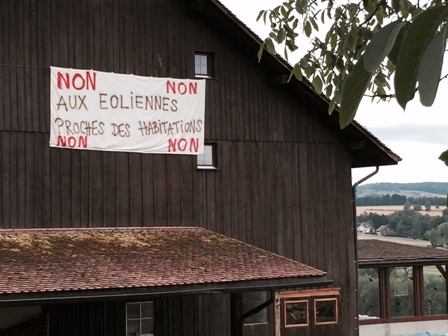
  • are not always easy to live with. People who live close to them may find their noise and their turning, flicking motion a disturbing irritant; wind turbines may even make some people ill.

There are no comments yet - add yours below

This helps to discourage spam